Batch traceability
A complaint? In a minute you know which batch, made from what, and who inspected it.
DiGi Smart Trace records which raw material batches every product batch was made from and which workstations it went through. It runs on the same tablet as production and quality control.
Price: custom quoteSee pricing
How does DiGi Smart Trace work?
From the label on the delivery, through a scan at the machine, to a batch tree in both directions. Click a step or wait, the animation advances automatically.
Manufacturers that work with us




Does this sound familiar?
The batch left a month ago and there is no data
Nobody knows which raw material it was made from, who inspected it and what else was made from the same delivery.
You recall too much, because you do not know exactly what
Without batch genealogy a defect in one raw material delivery means holding the whole warehouse.
Labels and notebooks live separately
The batch number is on the label, inspection results in a binder, and raw material consumption in a spreadsheet.
What it looks like in practice
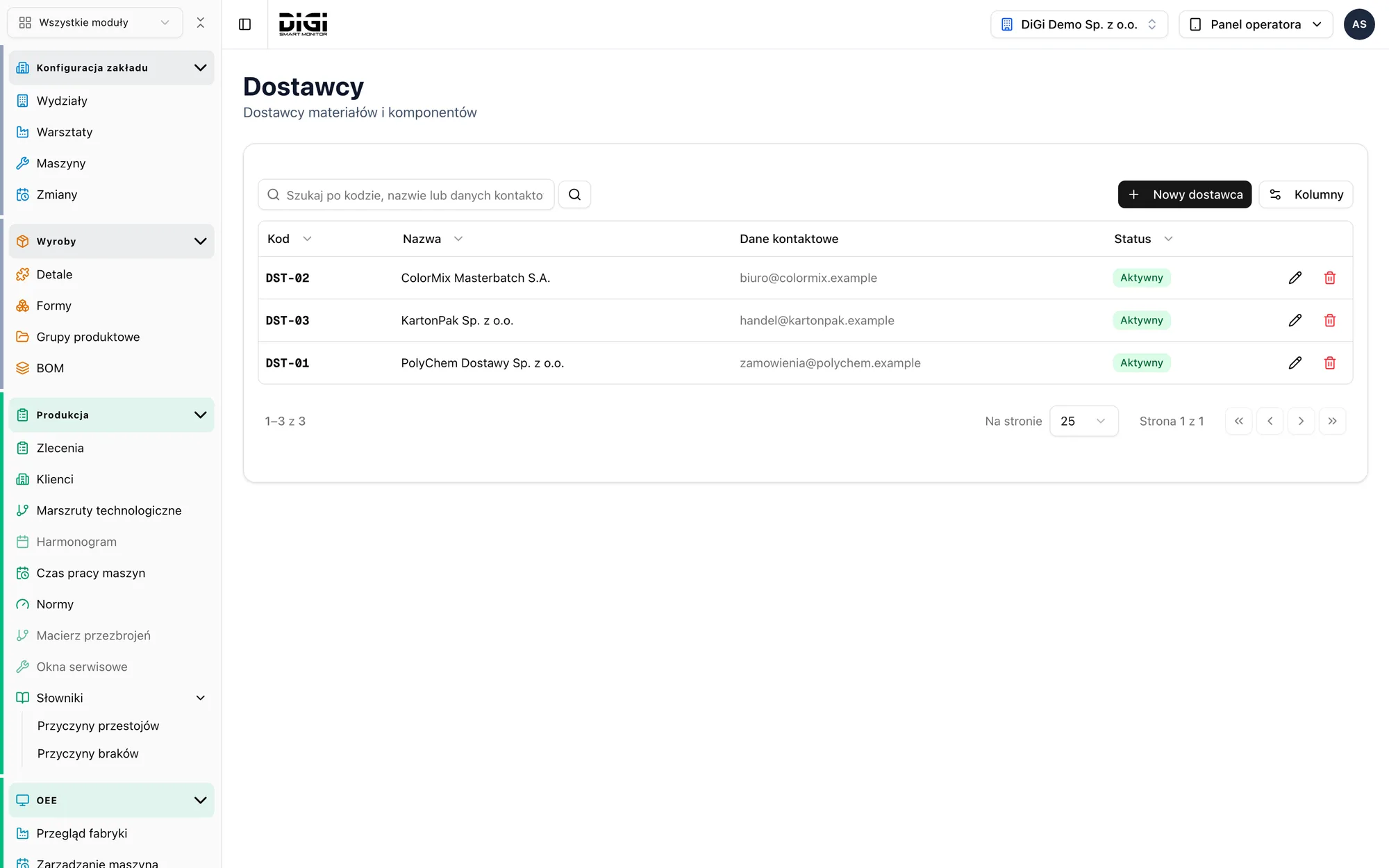
From receiving a delivery to a settled complaint, on system screens.
Every delivery is a batch with a number, a tag and a quality status
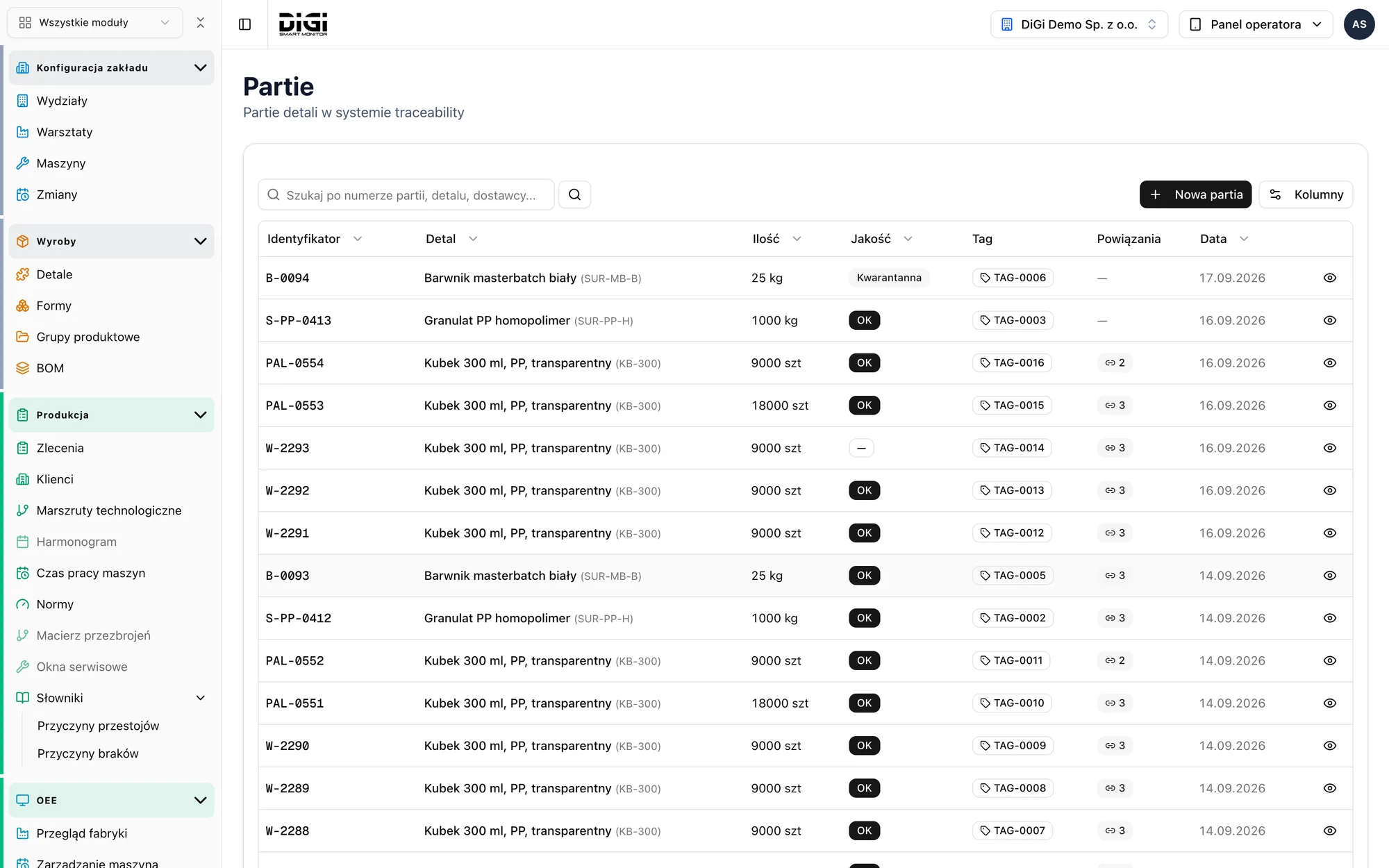
Raw materials, production batches and pallets are on one list. A delivery in quarantine will not go to a machine until the quality department releases it.
You know what is in the warehouse and whether it may be used.
A scan instead of retyping numbers
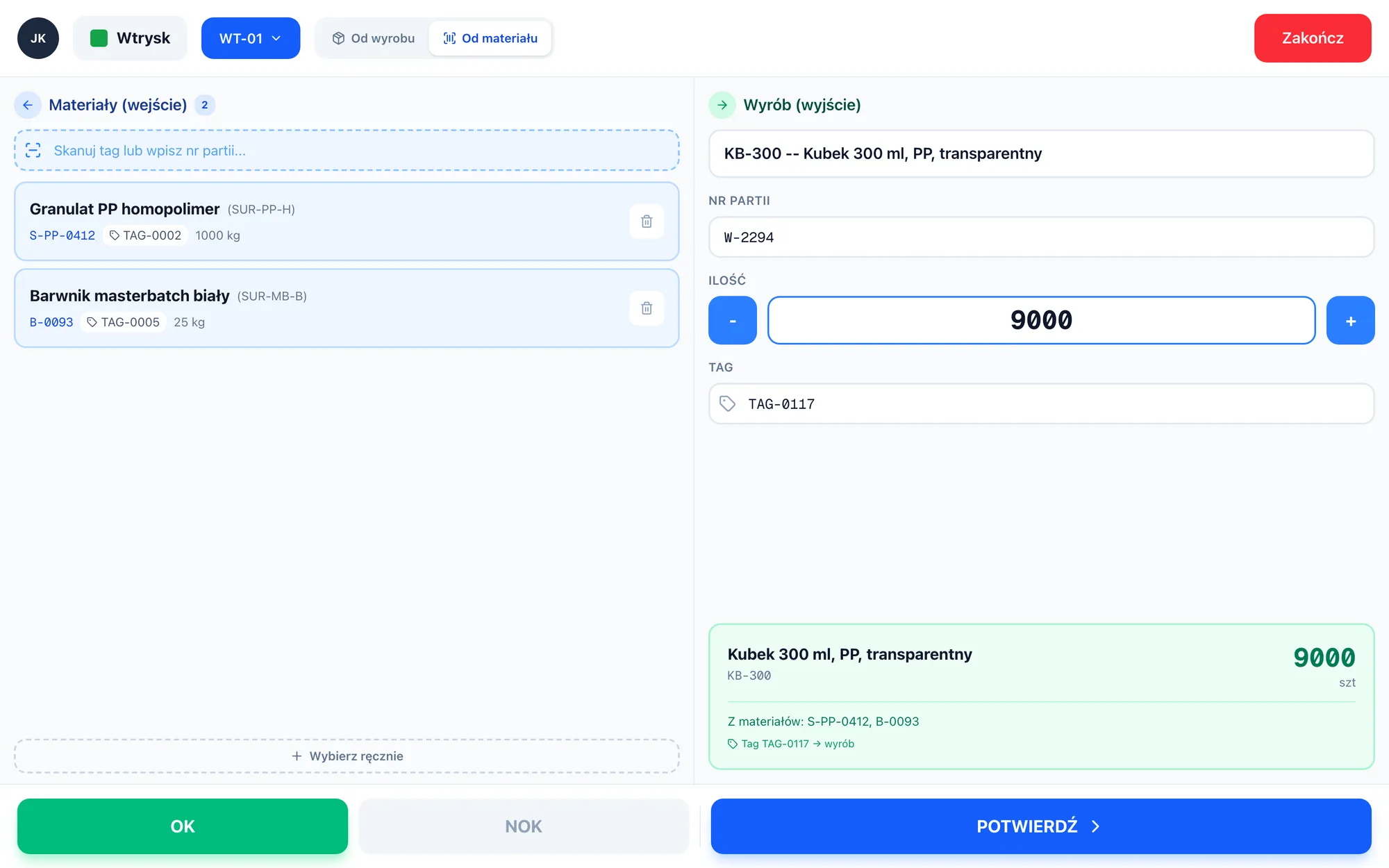
The operator scans the label or RFID tag of the granulate and the pigment at the hopper, picks the product and confirms the batch. Input and output link at the same moment.
Batch links are created at the moment of work, not afterwards.
From product to raw material in a minute
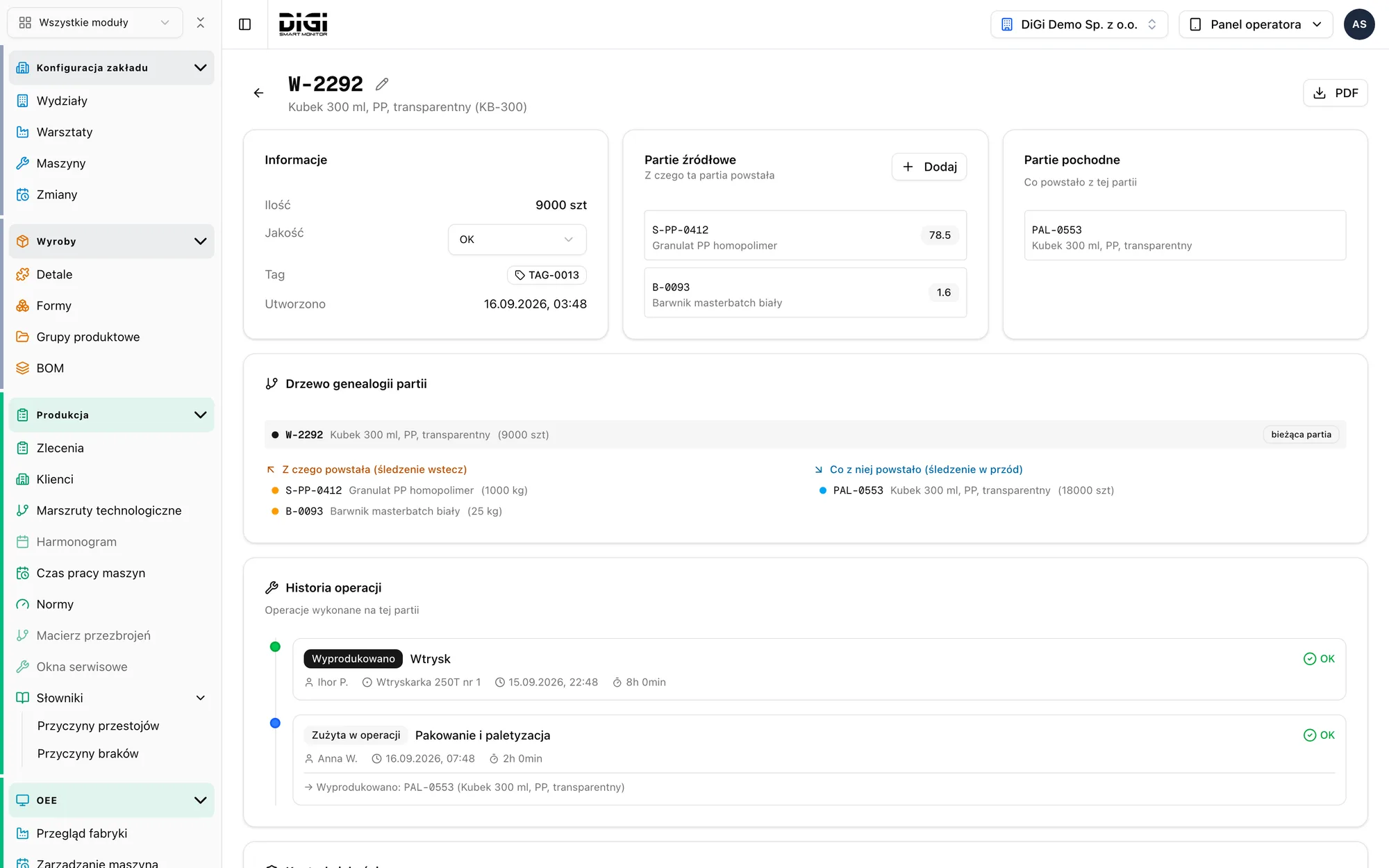
You open the batch and see what it was made from, who produced it, on which machine and what the quality inspection results were.
An answer for the customer the same day, with evidence.
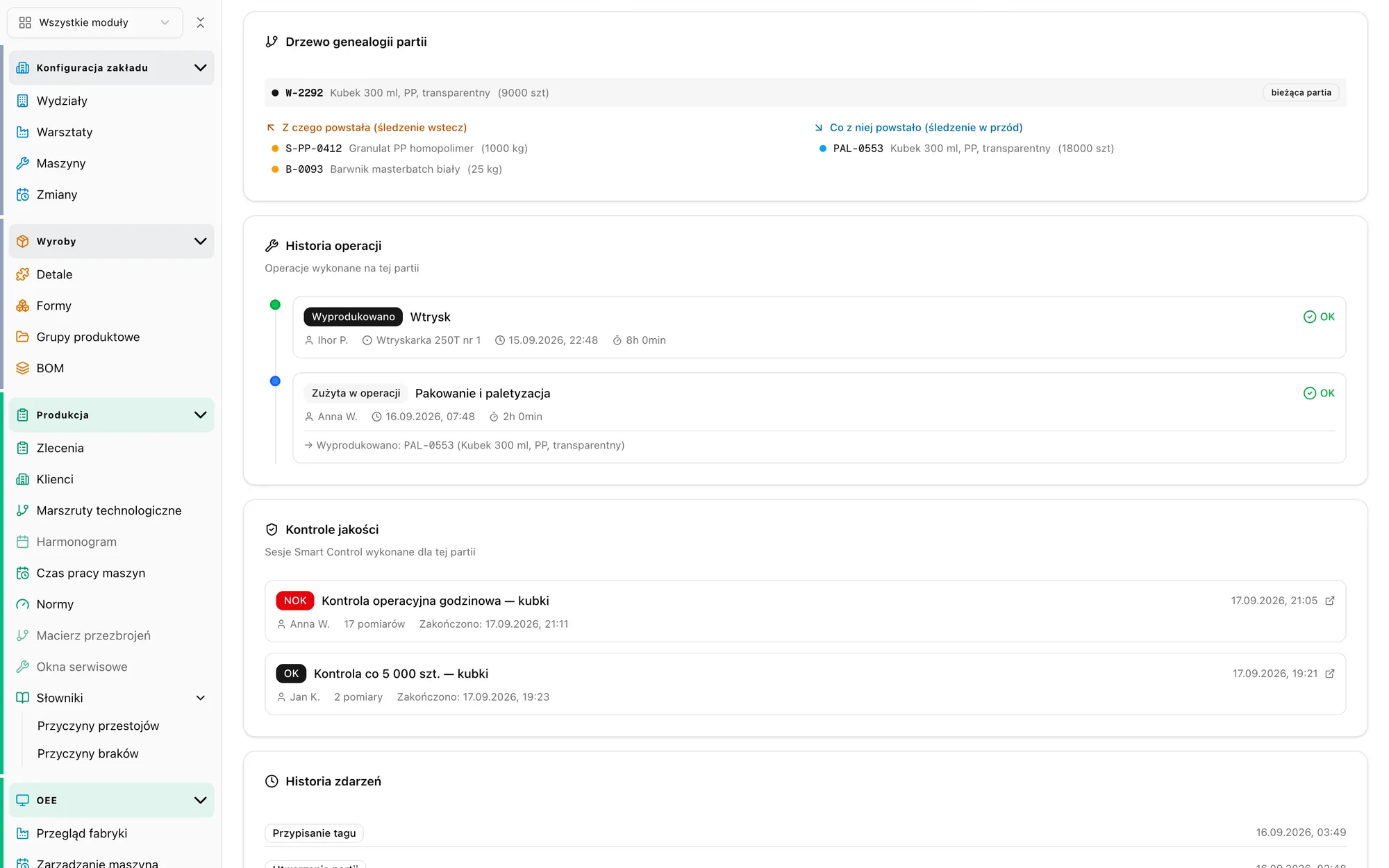
From the raw material to every pallet it went into
The supplier reports a problem with a pigment batch. The system shows the production batches and pallets it was used in.
You hold exactly as much as needed, not the whole warehouse.
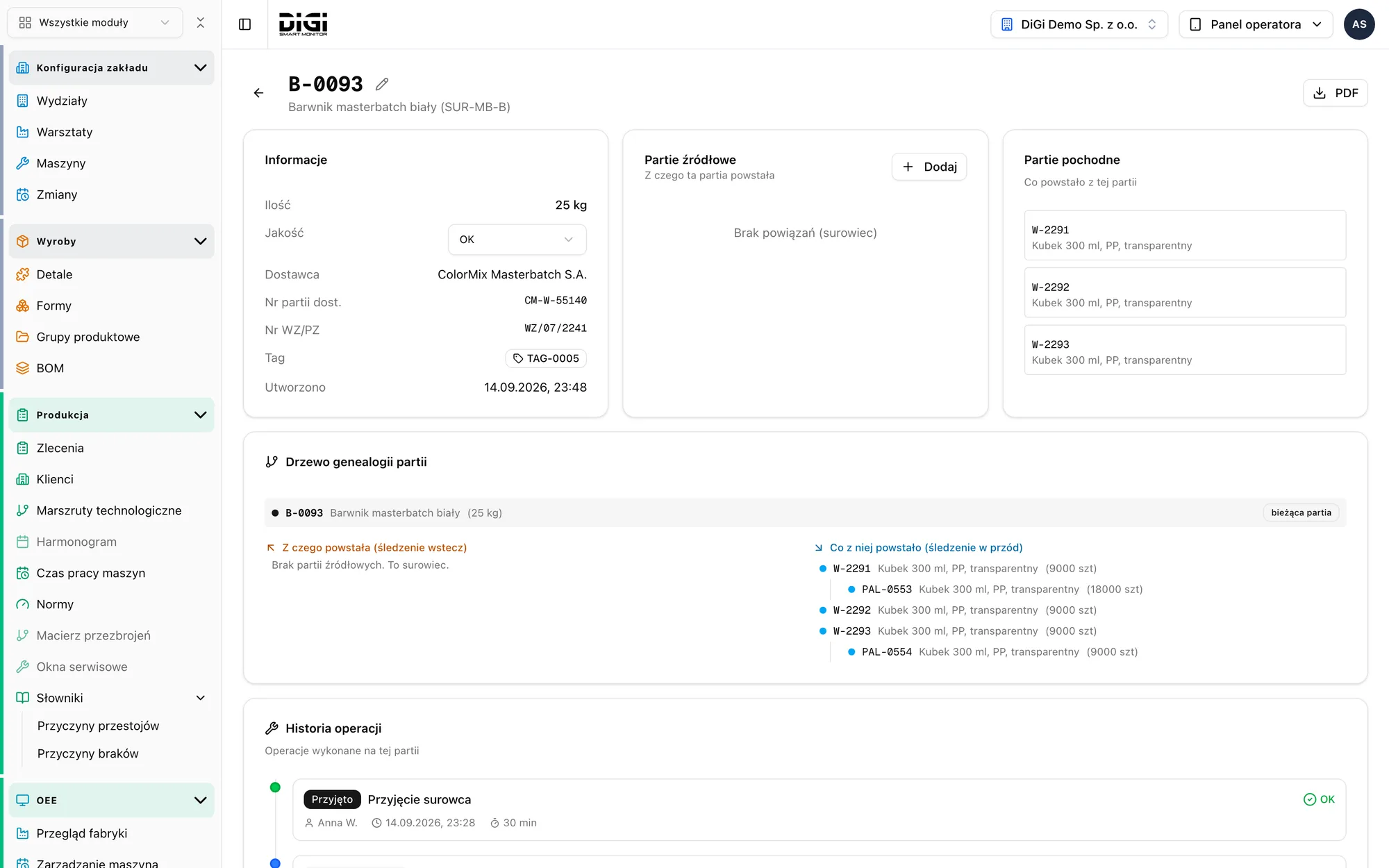
What sets DiGi Smart Trace apart
Genealogy in both directions, a full record of every pallet, processes laid out the way the floor is, and suppliers attached to batches.
Batch genealogy
Every batch knows what it was made from and where it went
The operator at the workstation indicates the input batches with a scanner. The system builds the tree of links, and it reads in both directions.
From product to raw material
A customer reports a bad pallet. You open the product batch and see which raw material batches it was made from, on which machine, on which shift and with which inspection results.
From raw material to product
A supplier reports a bad granulate batch. You open the raw material batch and see every product batch it went into. You hold exactly as much as needed.
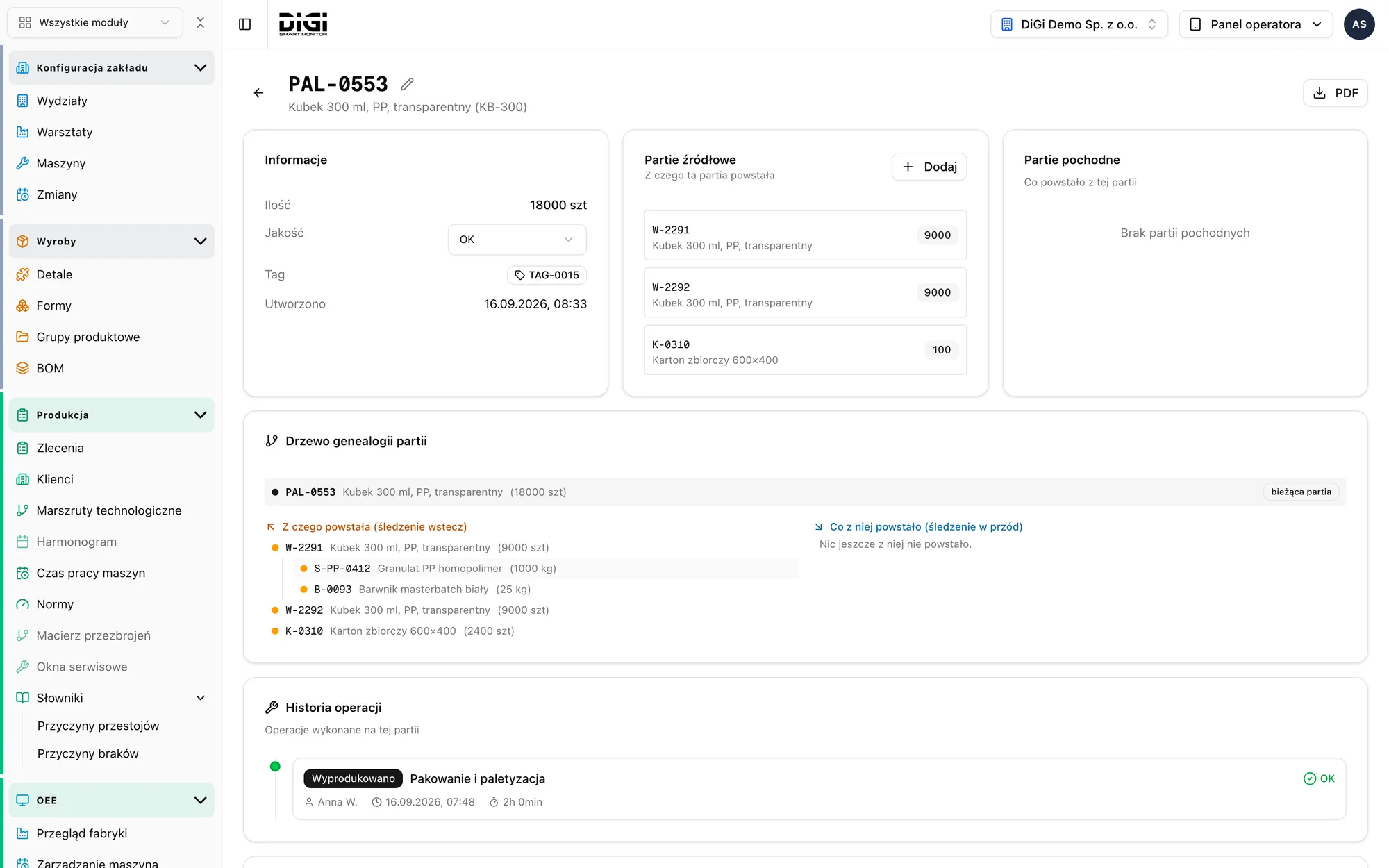
Pallet record
Every pallet has a full record: from what, who and when
A product pallet is a batch like any other: quantity, quality status, tag, source batches from moulding and the shipping carton, a genealogy tree down to the granulate and the pigment, an operation history with operator, time and duration.
The customer asks about a pallet? The record goes to PDF with one button.
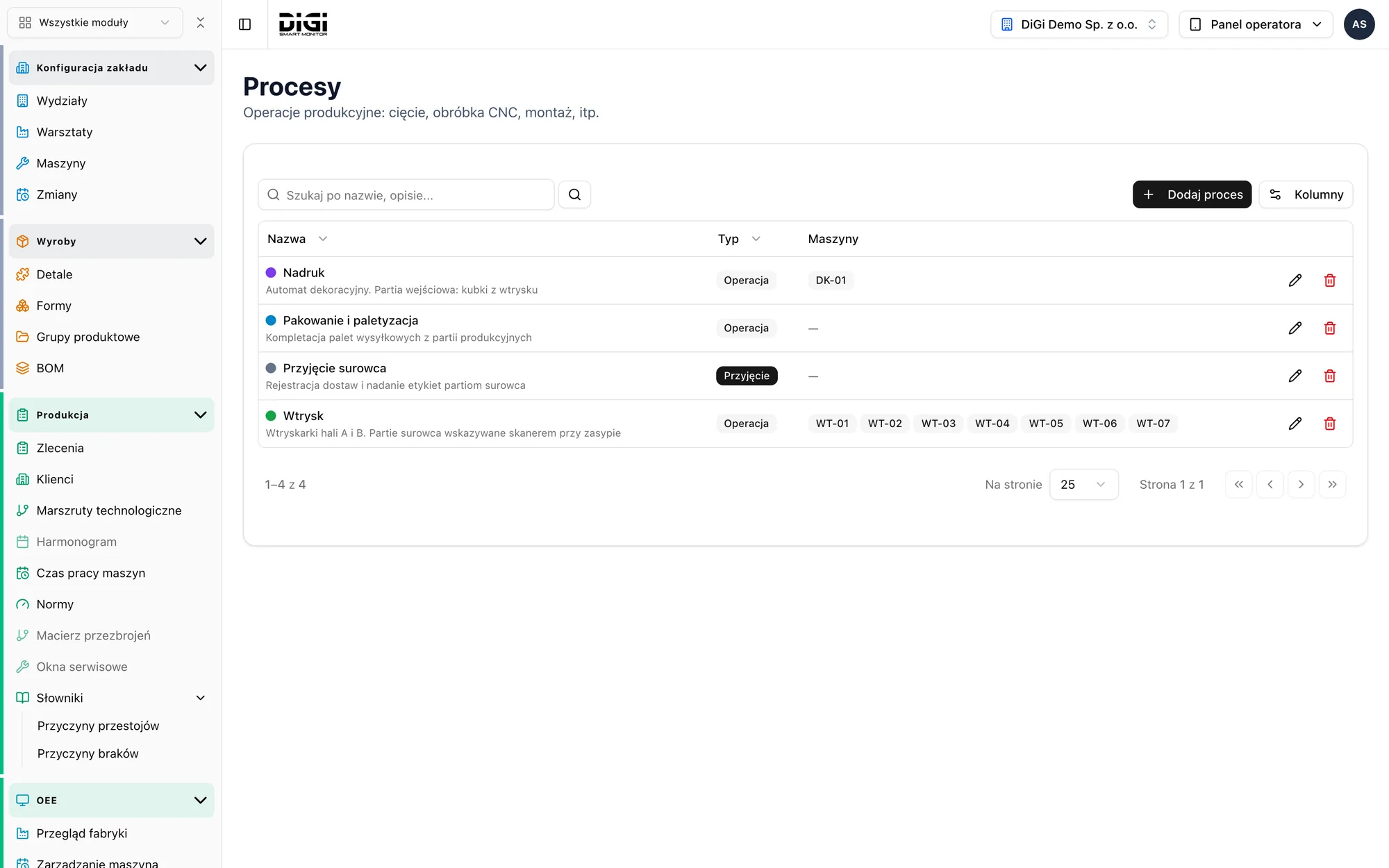
Processes and workstations
Processes laid out the way the floor is
Raw material receipt, moulding on seven machines, printing, packing and palletising: every process has its type, machines and working mode. At the scan the operator sees only what concerns their workstation.
A new process is one entry, not an implementation. The process session records who worked on the batch and when.
Suppliers
The supplier or us? The answer is in the batch number
Every raw material delivery has a supplier, the supplier's batch number and a document. When a defect shows up a week later, you know whose delivery the granulate came from and which batch to claim, instead of trading e-mails with three suppliers at once.
Numbering and delivery data can be pulled from ERP, and consumption sent back.
What Smart Trace is made of
Material batches
Every raw material delivery and every product batch has its own number, status and event history.
Linking batches: input and output
At the workstation the operator indicates which input batches the output batch is made from. A genealogy tree is created.
Tracing in both directions
From product to raw material: what was this made from. From raw material to product: where else did it go.
Barcode labels and RFID tags
The batch is identified with a barcode scanner or an RFID reader. No retyping numbers.
Processes and workstations
You define processes and workstations with working modes. The process session records who worked on the batch and when.
Batch quality inspection
A batch inspection is the same measurement session as in Smart Control. Results are attached to the batch.
Suppliers
A supplier register linked to raw material batches. You see whose delivery the problem comes from.
One product register
Parts, bills of materials and orders are shared with the efficiency and quality modules.
Everyone sees what they need
Pick your role.
- Where did this pallet come from? From the pallet to the raw material batch, machine, shift and inspection results in one view.
- Which pallets to hold after a bad delivery? A list of pallets the batch went into. You hold only those.
- What do I show the customer? Evidence with a date, an operator and batch numbers.
- Did the batch inspection happen? Inspection results attached to the batch, not to a binder.
- The supplier or us? The raw material batch with the supplier and the full operation history.
Four steps, without stopping production
We start with one process and one workstation: receiving a delivery and a scan at the machine.
- Step 1
Material flow map
Where raw material comes in, where the product batch is created, how you label deliveries and pallets today. One meeting, usually at the plant.
- Step 2
Pilot on one process
Receiving a delivery with a label, a scan at one machine, a product pallet with its own label. The operator scans instead of retyping.
- Step 3
Adjustments on batches
After two or three weeks we check the batch tree on a real complaint: numbering, suppliers, workstation modes.
- Step 4
More processes and ERP
More processes and workstations join, RFID where a label does not work, batch quality inspection, batch numbers from ERP.
Start with a pilot on one workstation
One product, one workstation, real data. After the pilot you decide whether and how fast we go further.
Common questions
Let's talk about batch traceability at your plant
We reply within 24 hours

Piotr will help you pick the solution that fits your production processes.
Phone: (+48) 668 211 736
Email: digismartcontrol@gmail.com